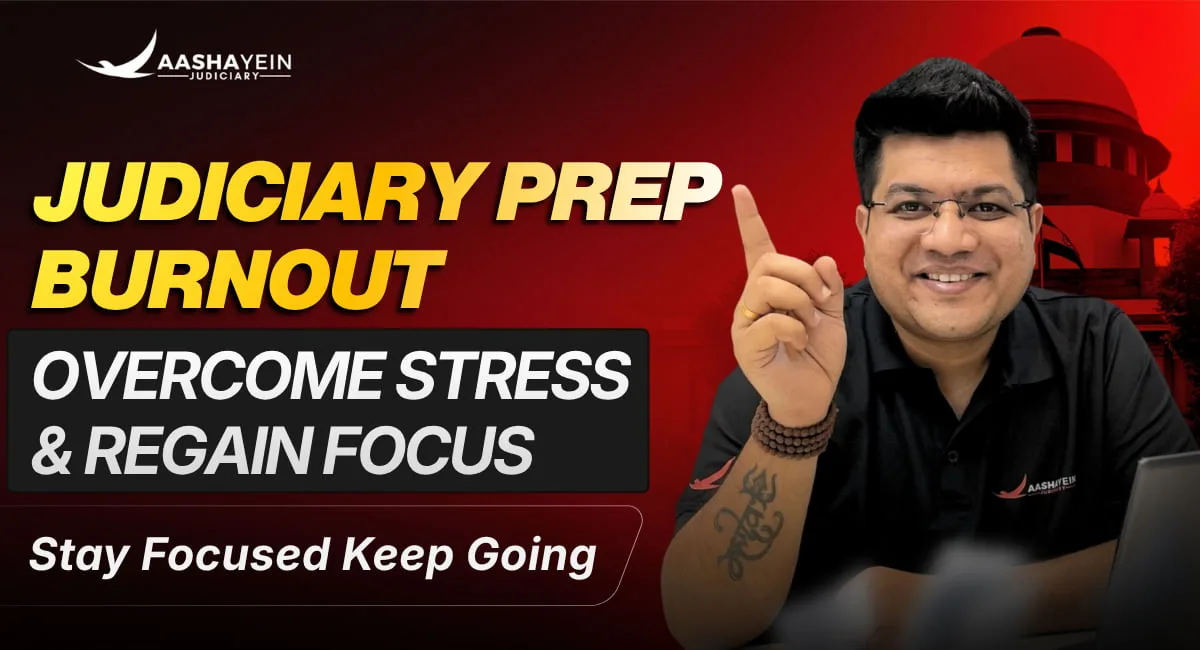
It usually starts quietly. You sit down to study and nothing goes in. You read the same paragraph three times and cannot remember what it said. You feel guilty for not studying and anxious when you do. You wonder why you are doing this at all.
This is burnout. It is real, it is common, and it is one of the most significant reasons judiciary aspirants quit or underperform after months of strong preparation. This blog is a practical guide to recognising burnout early and recovering from it without losing your preparation momentum.
What Burnout Actually Feels Like
Burnout in the context of long exam preparation is not just tiredness. It is a combination of physical exhaustion, emotional detachment, and cognitive slowdown. You can tell the difference between normal tiredness (you are tired but motivated) and burnout (you are tired and the thought of opening your notes creates dread).
Common signs of burnout in judiciary aspirants: inability to absorb new material despite sitting at the desk; frequent mood swings, irritability, or feeling emotionally flat; physical symptoms like headache, disrupted sleep, or appetite changes; avoiding mock tests because the thought of seeing your score is too stressful; feeling that the exam is pointless or that you will never clear it regardless of effort.
If three or more of these are true for you right now, you are likely experiencing burnout — and the solution is not to push harder.
Why Judiciary Preparation Is Particularly Burnout-Prone
The judiciary examination is one of the longest preparation journeys in Indian competitive exams. A typical aspirant prepares for 1.5 to 3 years. Unlike a one-time entrance exam with a defined date, the judiciary exam process involves multiple stages over many months, with gaps between notifications and results. This sustained, uncertain timeline is uniquely exhausting.
Add to this: the material is vast (multiple Acts across civil, criminal, constitutional, and revenue law), the competition is intense, and the fear of wasted years is constant. Burnout is almost inevitable if you do not build recovery into your preparation plan deliberately.
Recovery Strategy 1: Structured Rest Is Not Wasted Time
The single most damaging belief among judiciary aspirants is that any time not studying is wasted time. This belief causes candidates to sit at their desk for 10-12 hours a day while actually absorbing 3-4 hours of material, and to never take proper rest days. The result is chronic low productivity that eventually collapses into burnout.
Structured rest means planning your rest days in advance — not taking them guiltily when you collapse. One full day off per week (no notes, no mock tests, no legal reading) is a minimum, not a luxury. Evenings should wind down properly. Sleep is not a reward for completing tasks — it is a biological requirement for memory consolidation and cognitive function.
Recovery Strategy 2: Reduce Scope Temporarily
When you are burnt out, attempting to maintain your full daily study schedule is counterproductive. You will study with poor absorption and feel worse at the end of the day. Instead, reduce scope deliberately for 7-10 days: cover only one subject per day instead of three, do shorter revision sessions instead of long study blocks, and replace mock tests with light re-reading of notes you already know.
This is not giving up. This is maintenance mode. You are keeping the engine running at lower RPM to prevent a complete breakdown, not accelerating toward the wall.
Read Blog: Specific Relief Act for Judiciary Mains: Key Sections
Recovery Strategy 3: Physical Movement
The brain-body connection in burnout is well-established. Physical exercise — even 30 minutes of brisk walking or any sport you enjoy — produces measurable improvements in mood, cognitive function, and stress levels. You do not need a gym or a fitness programme. You need to get out of the chair and move.
Many judiciary aspirants spend 10-12 hours a day seated. This physical immobility contributes directly to the mental heaviness of burnout. A short outdoor walk — without your phone or legal audio — gives your nervous system a genuine rest that sitting at your desk never does.
Recovery Strategy 4: Social Connection
Isolation is both a symptom and a cause of burnout. Aspirants often withdraw from social relationships because they feel guilty not studying. But human beings are social creatures, and sustained isolation is psychologically harmful. Spend time with family or friends — not to discuss the exam, but just to be a person who exists outside of preparation mode.
Finding a small study group of fellow aspirants can help — not to feel competitive, but to share the experience of preparation. Knowing that someone else is also struggling normalises the difficulty and reduces the shame that burnout often produces.
Watch Our YouTube Video:
Specific Relief Act, 1963 One Shot | Complete SRA In One Video
Recovery Strategy 5: Reconnect with Why You Started
Burnout often disconnects you from your original motivation. You began this preparation for a reason — perhaps a desire to serve as a judicial officer, to have a secure and meaningful career, to make your family proud, or simply because you love the law. These reasons have not changed. Your access to them has been temporarily blocked by exhaustion.
Take 30 minutes — not to study, but to write down your original reasons for choosing the judiciary. Read judgments that inspired you at the start of your preparation. Remember the version of yourself that began this journey with enthusiasm. That person still exists. They are just tired.
When to Seek Help
If burnout is accompanied by persistent hopelessness, inability to function in daily life, or thoughts that your life has no value, these are signs of something beyond exam burnout. Please reach out to a mental health professional, a trusted family member, or a counsellor. Exam pressure should never be allowed to become a threat to your wellbeing. No examination is worth your health.
Building Burnout Prevention Into Your Preparation
The best time to deal with burnout is before it arrives. Build recovery weeks into your preparation calendar every 6-8 weeks of intense study. Schedule mock tests on specific days so you are not in a constant state of test anxiety. Celebrate small wins: finishing a chapter, correctly solving a problem question, improving a mock test score. These small acknowledgements of progress prevent the accumulation of invisible discouragement that leads to burnout.
Frequently Asked Questions
Q1. Is burnout normal for judiciary aspirants?
Yes. Given the length and intensity of judiciary preparation, burnout is very common. It is not a sign of weakness or that you are unsuited for the exam. It is a signal that you need recovery.
Q2. How long does it take to recover from exam burnout?
With structured rest and reduced scope, most aspirants start feeling better within 7-14 days. Full recovery can take 3-4 weeks if the burnout is severe. Do not expect to return to full productivity in 2-3 days.
Q3. Should I take a complete break from studying during burnout?
A total break of 2-3 days can help in acute burnout. For ongoing burnout, a better strategy is reduced scope and structured rest rather than a complete stop, which can increase anxiety.
Q4. Can exercise really help with exam burnout?
Yes. 30 minutes of physical activity produces measurable improvements in mood, stress levels, and cognitive function. Even walking counts.
Q5. How do I tell the difference between normal tiredness and burnout?
Normal tiredness: you are tired but still motivated; rest restores your energy. Burnout: rest doesn't help much; the thought of studying creates dread; you feel detached from your preparation goal.
Q6. Is it okay to skip mock tests during burnout recovery?
Yes, temporarily. Replace mock tests with lighter revision during recovery. Resume mock tests once cognitive function improves.
Q7. How can I prevent burnout before it happens?
Build rest days into your weekly schedule, plan recovery weeks every 6-8 weeks, maintain some social connections, and avoid studying for 10+ hours daily on a sustained basis.
Q8. What if I feel guilty taking a rest day?
The guilt is the burnout speaking, not rational thought. Remind yourself: rest is part of preparation, not a break from it. A well-rested brain retains more in 6 hours than an exhausted brain does in 12.
Q9. Should I discuss burnout with my coaching mentor or teacher?
Yes. A good mentor will understand and adjust your schedule. Hiding burnout and pretending to perform normally while struggling makes recovery harder and longer.
Q10. What is the most important thing to remember about burnout?
It is temporary. It is treatable. It does not mean you cannot clear the exam. It means you need recovery — and recovery is a skill, not a weakness.
Conclusion
Burnout is not failure. It is the cost of sustained effort in a difficult, long-duration preparation. The candidates who clear the judiciary examination are not those who never experienced burnout — they are those who recognised it, managed it, and returned to preparation stronger. The recovery strategies in this blog are not theory. They are practical steps that work.
At Aashayein Judiciary, Nitesh Sir has worked with hundreds of aspirants through the emotional ups and downs of the judiciary preparation journey. We understand that clearing the exam requires not just knowledge but also resilience, self-awareness, and the ability to pace oneself over the long road. Prepare with a programme that takes the full picture seriously. Join Aashayein Judiciary and prepare sustainably for the career you deserve.

About Aashayein Team
Legal Expert
Start Your Journey
Join 50,000+ aspirants and get access to premium courses, study material, and expert guidance.
Enroll NowView All CoursesFree Resources
Newsletter
Get weekly updates on legal news, judgments, and exam tips.