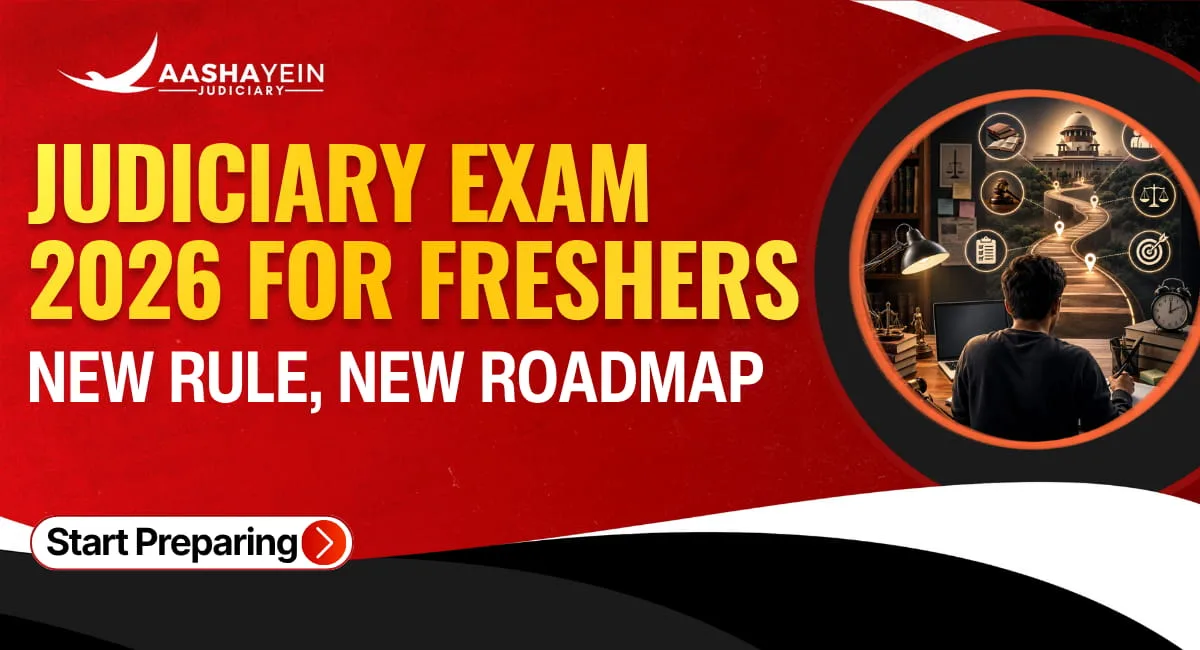
Every law graduate in India can now sit for the Civil Judge Exam without completing three years of court practice, at least until 31 March 2027. That single fact has set off a wave of excitement across law colleges and social media over the last few days.
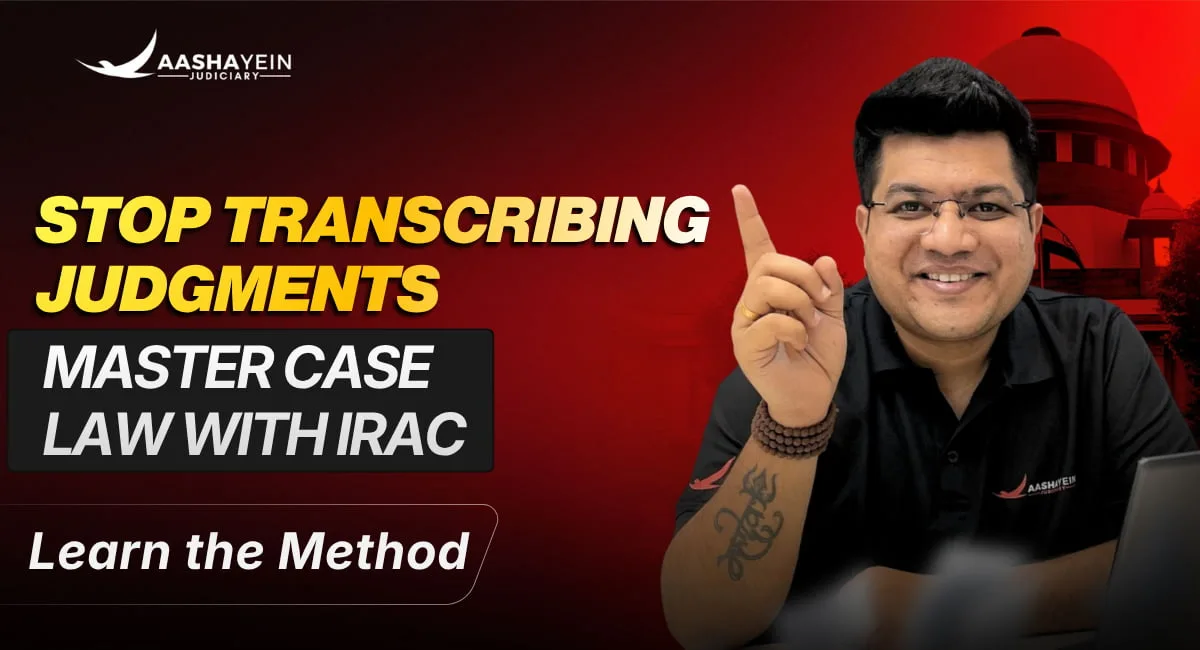
But eligibility and preparation are two very different things. In a recent live session, Nitesh Sir, who has been training judiciary aspirants since before online coaching existed, addressed law students who want to start their Judiciary Exam 2026 preparation from scratch after the Supreme Court's ruling on the three year practice rule. His message was direct. Do not chase the next vacancy. Build your foundation first.
What the Rule Change Actually Means
The source for this piece does not name the specific case or give a formal citation for the Supreme Court ruling. It refers to it only as the judgment on the three year practice rule, so that is how it is described here rather than attaching a case name that cannot be confirmed.
What is clear from the ruling is the timeline. Until 31 March 2027, every law graduate is eligible to appear for judiciary exams like the Civil Judge Exam, regardless of how many years they have practiced. From 1 April 2027 onward, one year of court practice will again be required before a candidate can apply.
Period | Eligibility Position |
Now until 31 March 2027 | All law graduates can apply for the Civil Judge Exam, no prior practice needed |
From 1 April 2027 onward | One year of court practice will be required before applying |
This window is being talked about everywhere as an open door for bumper vacancies across states. Nitesh Sir's caution is specifically for one group inside that excitement, the freshers who have never systematically prepared before and are now tempted to start based on vacancy buzz rather than a real study plan.
Read Blog: MP Judiciary Vacancy 2026: 405 Posts Expected, Notification and Details
Being Eligible Does Not Mean Being Ready
A law graduate who was not planning to sit for judiciary exams because of the three year rule may now feel instantly qualified. That feeling is misleading. The judgment makes you eligible, it does not make you competent, and it certainly does not prepare you for a three stage exam that includes Prelims, Mains, and Interview.
Competition is not going to shrink because more people are eligible. If anything, it intensifies. There is also a real chance that exam patterns evolve further, since the debate that led to this ruling was partly about whether fresh graduates are equipped enough for judicial responsibilities. Aspirants should expect scrutiny, not a shortcut.
This distinction matters most when it shows up in your answer sheet. Depth of preparation is what an examiner can see in your Mains answers. A rushed reading of a topic produces a messy, shallow answer, while a candidate who has genuinely understood a provision writes with clarity because the understanding is already there before the pen touches paper.
Why the Next Vacancy Trap Catches Freshers
Anyone starting today needs to understand who they are competing against. A large section of aspirants had already finished their preparation, some had cleared Prelims, some had reached Mains or Interview stage, before the three year practice rule paused the process. Their foundation is set. They have already covered the new criminal laws and revised civil law portions. They are close to exam ready. A fresher entering the same competition is not on equal footing with this group, and there is no shortcut to closing that gap except preparation.
The trap freshers fall into is targeting a vacancy that is three or four months away. Because the timeline is short, the instinct is to look for shortcuts, thirty day crash plans and quick tricks that promise to cover the whole syllabus fast. States like Madhya Pradesh have not held an exam in a long time and already have a large pool of well-prepared candidates waiting. A fresh graduate seeing hype around an expected notification and rushing to match that timeline ends up skimming the entire syllabus instead of studying any part of it properly.
The result of this rush shows up at every stage. A syllabus covered in a hurry rarely survives Prelims, and even where it does, the odds of clearing Mains drop sharply because answers lack depth. When this cycle repeats across two or three vacancies, chasing one short deadline after another, a fresher can lose a year to a year and a half without ever building real command over the subjects.
The Roadmap for Building a Real Foundation
The advice for freshers is to treat preparation, not the vacancy calendar, as the target. The question to keep asking is not when the next notification lands, it is whether a particular subject is genuinely ready. This is also where exam relevance becomes useful, because reading with an eye on how a topic gets tested keeps the study focused rather than open ended.
Start with the core subjects that carry weight across almost every state's judiciary syllabus. These are the three new criminal laws, BNS, BNSS, and BSA, along with CPC, the Constitution, the Transfer of Property Act, the Contract Act, the Specific Relief Act, and the Limitation Act. Most current judiciary syllabi have also added women and children centric statutes such as the Juvenile Justice Act, POCSO, and the Domestic Violence Act, and these now need the same conceptual attention as the older core subjects.
Each topic should be read from the bare act first, then supported with a reference book or a class explanation, with the goal of conceptual clarity rather than memorised lines. Genuine depth in one topic reduces the need to rote learn sections later, because a candidate who understands the purpose and application of a provision tends to recall it naturally.
Watch our YouTube video & boost your Judiciary preparation!
COI One Shot | Complete Constitution of India in One Video
Check Every Topic Against PYQs From Multiple States
Reading a topic is only half the process. After covering it, the source stresses checking Prelims and Mains previous year questions, and not only from your own target state. A question style tested in Delhi one year can reappear in Haryana or Madhya Pradesh the next. Aspirants who study only their own state's PYQs end up with a narrower preparation than the exam actually demands.
This becomes a self-check as much as a study step. After finishing a topic, the useful question to ask is whether these previous year questions, across several states, can actually be answered now. If not, that topic needs more depth before moving on.
Track How the Exam Pattern Is Evolving
Judiciary and prosecution exam patterns are not static. The source points to recent APO papers from Uttar Pradesh, Bihar, and Haryana, and the CBI APP exam held in January, as examples where question difficulty and framing have already begun to shift. Recognising these shifts alongside core preparation helps a fresher avoid being caught off guard by a paper that looks different from older PYQs.
Where State Specific Laws Fit In
Only once the core subjects are strong should a fresher move to state specific portions such as rent control laws or land revenue codes. A candidate who has built real command over the common subjects finds these state specific and other minor pan-India acts far easier to pick up, because the underlying legal reasoning is already familiar. Jumping straight into a state's rent control law or judgment writing practice without first knowing the core subjects, as the source points out, simply does not work.
Building a Realistic Timeline
For someone starting preparation from zero, the suggested minimum timeline is one to one and a half years, covering theory, PYQ based practice, and honest self-testing along the way. This is not a rigid number, it is a reminder that a three stage exam with a large syllabus needs sustained, structured time rather than a compressed sprint.
For free orientation, the Aashayein Judiciary YouTube channel carries state-wise playlists as well as playlists for the core laws. The source recommends starting with the core law videos to build a baseline in subjects that otherwise feel intimidating, such as CPC or the Specific Relief Act, before deciding how to structure further self-study.
For a more structured option, a new Foundation Batch is starting from 8 September, covering the Specific Relief Act along with the other core subjects, available in both online and hybrid mode. The batch includes live and recorded classes, an e-library of past batch recordings, Prelims and Mains test series, dictated study material, printed modules for state specific portions such as judgment writing or translation, and structured mentorship on subject sequencing.
Batch | Validity | Best Suited For |
Advance | 2 years | Aspirants at a slightly later stage of preparation |
Ultimate | 3 years | Aspirants starting from their fourth or fifth year of law college |
A 50 percent discount on Foundation Batch fees has been running since the day the judgment was announced, and according to the session this is valid only until 31 August. Aspirants considering enrolment should check the current offer status directly, since this window is short.
Doubts Freshers Commonly Raised
A recurring worry after the judgment is a sudden spike in anxiety about performance, and this usually traces back to a sense that preparation has not been thorough enough yet. Building genuine subject competence is the most direct way to reduce this fear, because confidence tends to follow real command over material rather than the other way round.
On the question of coaching institutes pushing batches, the honest answer is that every coaching business will promote its courses, and free YouTube content exists for anyone who prefers to self-study. What should be evaluated is whether the guidance given is accurate and not misleading, not whether a course is being sold at all.
On LLM, the source is clear that it is a separate academic path, useful for those interested in academics, CLAT PG, or PSU roles, but not a requirement for someone focused on litigation or judiciary preparation. On age, starting at 30 is still workable in most states where the upper age limit for Civil Judge stretches to 35, provided personal circumstances allow for consistent study. On academic record, an average percentage in law school, in Hindi medium or English medium, does not determine competitive exam outcomes. Nitesh Sir cited his own example, an average student through school with a below-average tenth board score, who still built a career in judiciary training after committing to his law preparation seriously.
On current affairs, the weight it carries depends on the state. It matters more for exams like Delhi Judiciary, but is far less emphasised in states like Madhya Pradesh, Uttar Pradesh, or Rajasthan for the Mains stage. Where it does matter, the most recent six to eight months tend to be more relevant than the full preceding year.
What This Window Really Means for You
The eligibility window created by this ruling is real, and it will bring genuine opportunity when notifications start landing. What decides who benefits from it is what a candidate does with the months before those notifications arrive, not how quickly they enter the first exam that opens up.
Aashayein Judiciary has trained judiciary aspirants since well before online coaching became common, and the approach Nitesh Sir outlines here, core subjects first, PYQ analysis across states, then state specific portions, has been the same throughout. Freshers preparing for the Civil Judge Exam, PCS J Exam, or APO Exam can build this foundation through the free core law playlists on the Aashayein Judiciary YouTube channel, or through the structured Judiciary Coaching offered in the Online Judiciary Coaching Foundation Batch, complete with Judiciary Notes, Judiciary Study Material, Mock Test series, and PYQ based practice from Prelims through Interview.
Frequently Asked Questions
Q1. Does the new eligibility rule mean I am ready to attempt the Civil Judge Exam?
No. The ruling only removes the three year practice requirement until 31 March 2027. It does not shorten the syllabus or reduce competition, so readiness still depends on how thoroughly you have prepared.
Q2. Should freshers start preparing for the very next expected state notification?
The source advises against this. Targeting an immediate vacancy usually forces a rushed, shallow reading of the syllabus, which lowers the chances of clearing Prelims or Mains.
Q3. Which subjects should a fresher law graduate begin with?
Start with core subjects, the three new criminal laws, CPC, the Constitution, the Transfer of Property Act, the Contract Act, the Specific Relief Act, and the Limitation Act, along with women and children centric statutes like the JJ Act, POCSO, and the Domestic Violence Act.
Q4. Is it enough to study previous year questions from only my own target state?
No. The source recommends checking Prelims and Mains PYQs from multiple states, since a question style used in one state often reappears in another.
Q5. How important is current affairs for Judiciary Mains preparation?
It depends on the state. It carries more weight for exams like Delhi Judiciary and is less emphasised in states such as Madhya Pradesh, Uttar Pradesh, or Rajasthan. Where relevant, the last six to eight months matter more than the full year.
Q6. Can someone start judiciary preparation at the age of 30?
Yes, in most states the upper age limit for Civil Judge goes up to 35, so starting at 30 is workable if personal circumstances allow consistent study time.
Q7. Does an average academic record affect judiciary preparation?
No. Academic percentages in law college do not determine competitive exam outcomes. What matters is the depth and consistency of preparation from this point forward.
Q8. Should freshers complete an LLM before starting judiciary preparation?
Only if they are interested in an academic path, CLAT PG, or PSU roles. For those focused on litigation or judiciary preparation, an LLM is not necessary.
Q9. How much time should a fresher set aside for judiciary preparation?
The source suggests a minimum of one to one and a half years from a standing start, covering theory, PYQ practice, and regular self-testing.
Q10. Where can freshers access free study material to start preparation?
The Aashayein Judiciary YouTube channel has state-wise playlists and dedicated playlists for the core laws, useful for building an initial orientation before deciding on further coaching or self-study.

About Aashayein Team
Legal Expert
Start Your Journey
Join 50,000+ aspirants and get access to premium courses, study material, and expert guidance.
Enroll NowView All CoursesFree Resources
Newsletter
Get weekly updates on legal news, judgments, and exam tips.